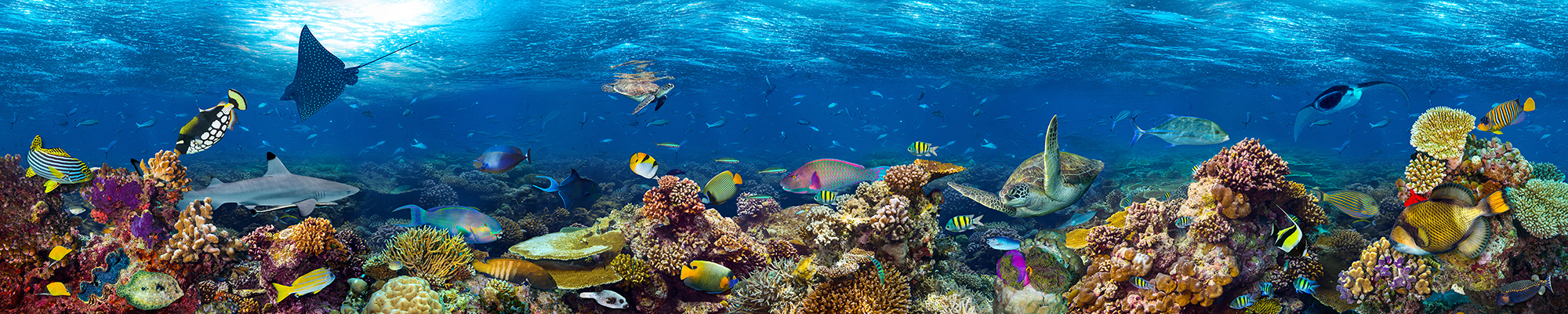
Abiotic conditions influence biodiversity and population connectivity, the assessment of which is critical for predicting climate change impacts and guiding conservation efforts. Coral reefs face severe losses, making effective conservation strategies increasingly urgent. Here, we use a seascape genomics approach to examine the population genetic structure of three non-model scleractinian corals around the Arabian Peninsula, a region with distinctive oceanographic features. We reveal contrasting patterns across species, which we integrate with geographic distances, larval dispersal models, and environmental data. Population structure appears shaped both by isolation by distance (IBD) and isolation by resistance (IBR), with environmental gradients often covarying with spatial separation. Our findings clarify coral diversification and evolutionary responses to conditions around the region. This work also provides a methodological framework to advance our understanding of processes structuring reef populations, thereby informing efforts to design robust marine protected area networks in the face of climate change and biodiversity loss.