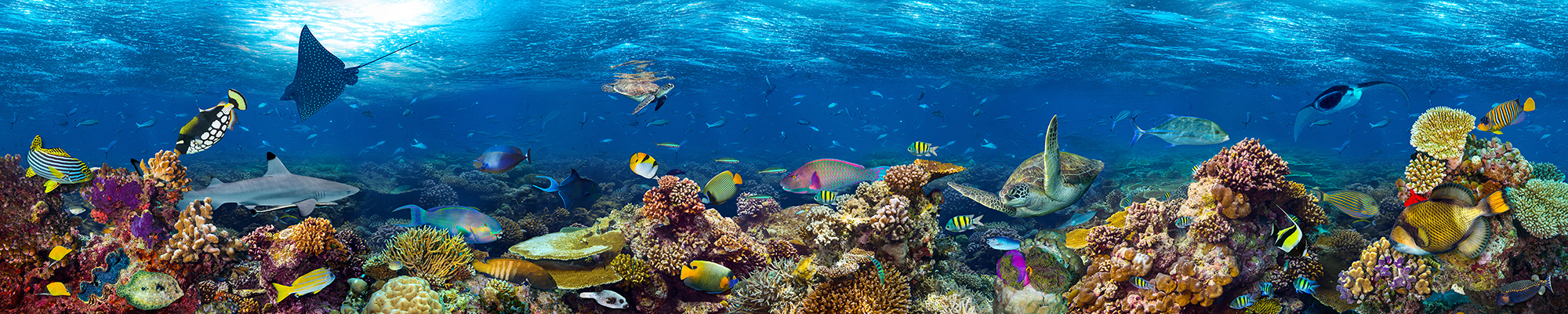
Probiotics can enhance coral thermal tolerance, yet their ecosystem-level effects remain unknown. Here, we present the first long-term in-situ test of whether coral-targeted probiotics influence adjacent cryptobenthic reef communities during a record marine heatwave. Probiotics were applied to Pocillopora favosa and Acropora spp. coral colonies for 18 months, spanning the fourth global bleaching event. Cryptobenthic communities were assessed using biomimetic monitoring structures integrating biodiversity surveys, molecular profiling, microbial network analyses, and metabolic assays. Before the heatwave, probiotic and control patches were comparable across structural, microbial, and functional metrics. Following thermal stress, control patches exhibited pronounced losses of cryptobenthic invertebrate abundance and taxonomic breadth, microbial network fragmentation, and net carbonate dissolution. In contrast, probiotic-treated patches retained higher biodiversity, cohesive microbial interaction architectures, and positive calcification. These findings demonstrate that coral-targeted probiotics can scale from host-level intervention to buffer adjacent ecosystem-level responses to extreme marine heatwaves under accelerating climate change.