07 September, 2026
What started as a field experiment in the Red Sea has now attracted attention from science, ocean, and environmental media around the world.
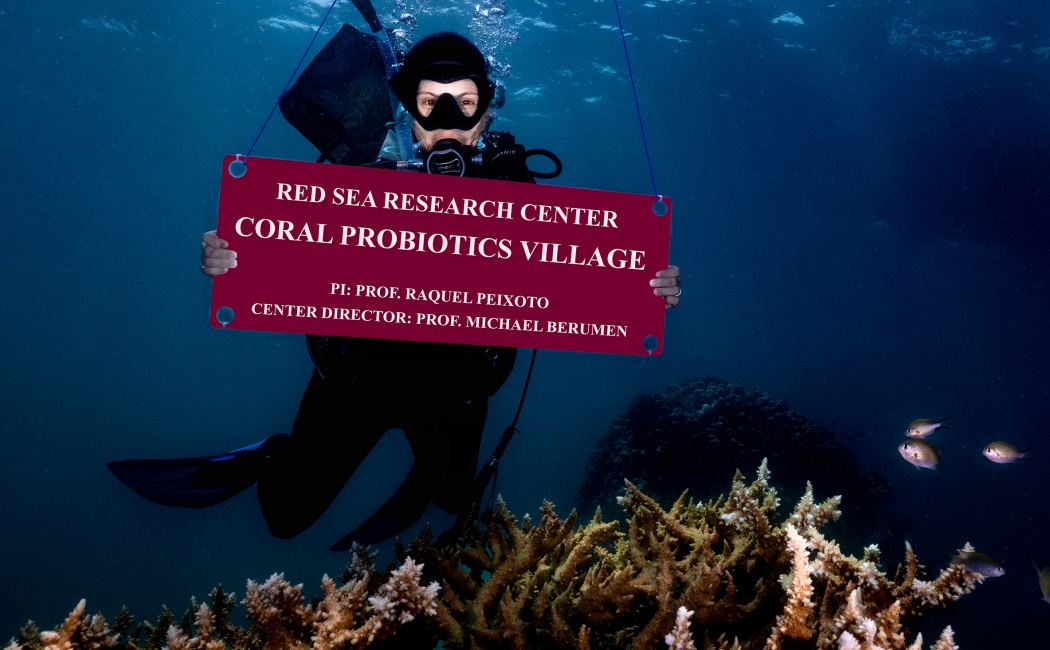
Our recent research on probiotic and postbiotic treatments for heat-stressed corals, published in Cell Reports, has been featured by several international outlets, highlighting the potential of microbial therapies as an additional tool to support coral resilience during marine heatwaves. The study tested live probiotic and inactivated postbiotic treatments on Acropora cf. valida during a natural marine heatwave in the Red Sea. After 15 days, one probiotic and one postbiotic treatment significantly improved coral health, while further analyses revealed changes in the corals’ microbial and metabolic profiles. Importantly, the experiment took place directly in the ocean, providing a step towards translating microbial therapies from controlled laboratory and aquarium settings to real reef environments.
The work and its broader implications have been covered by The Microbiologist, EurekAlert!, Good News Network, Oceanographic Magazine, and ECO Magazine. Across their stories, a common theme emerges: understanding and working with the coral microbiome could open new possibilities for supporting reefs as they face increasing thermal stress.
As highlighted in the coverage, postbiotics are particularly promising from a practical perspective. Because they use inactivated microbes or their bioactive components, they could potentially offer advantages such as longer shelf life, easier storage and transportation, and lower production costs compared with live microbial formulations. At the same time, the research represents a starting point rather than a standalone solution. Further work is needed to understand how these treatments work and how they could be safely and effectively developed for broader coral restoration applications.
As Dr. Erika Santoro, co-lead author of the study, emphasizes, microbial therapies should be seen as additional tools for improving coral resilience, alongside the broader actions needed to address the causes of climate change.
Read the stories about our research:
The Microbiologist — Probiotic and postbiotic treatments revive heat-stressed corals
Good News Network — Red Sea coral dying from heat stress is being revived with probiotics
Oceanographic Magazine — Probiotic treatments help heat-stressed corals survive
ECO Magazine — Probiotics and postbiotics boost coral health during Red Sea heatwave